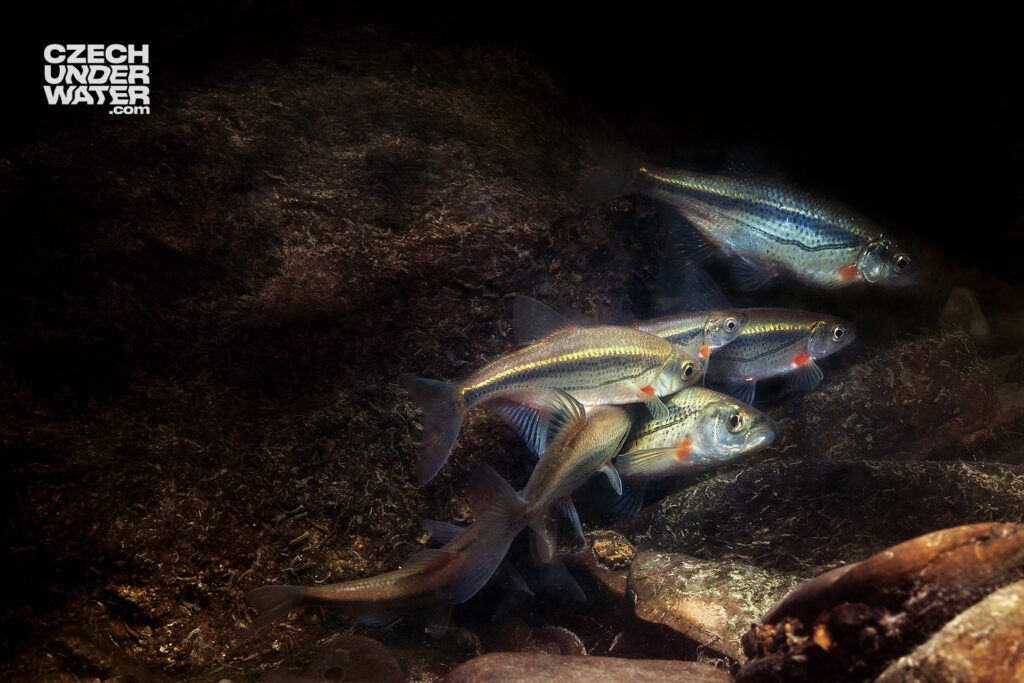
Při potápění v tůních říčky Veličky v roce 2016 jsem náhle zahlédl hejno drobných stříbřitých rybek, které svižně mířilo k proudnějším úsekům řeky. Brzy mi došlo, že spěchají na svá trdliště. Byly to ouklejky pruhované (Alburnoides bipunctatus), nenápadné, a přesto fascinující rybky.
Nejtypičtějším znakem ouklejek je dvojitá řada černých teček podél postranní čáry, která vytváří dojem tmavého pruhu a usnadňuje jejich rozeznání. Dorůstají jen 10–15 cm a na jaře se vydávají do proudných kamenitých úseků, kde kladou tisíce drobných jiker. Rybky se vylíhnou během několika dní – pokud je voda opravdu čistá a dobře okysličená. Ouklejka žije jen ve zdravých tocích, typicky v lipanovém a parmovém pásmu. V Česku se vyskytuje ostrůvkovitě v obou hlavních povodích, labském i dunajském. Je zákonem chráněná a patří mezi silně ohrožené druhy. I když je nenápadná, její přítomnost hodně napovídá o kvalitě a stavu našich řek
Spawning of the Riffle minnow (Alburnoides bipunctatus)
While diving in the pools of the Velička River in 2016, I suddenly spotted a school of small silvery fish swiftly heading toward the faster-flowing sections of the river. It soon became clear that they were rushing to their spawning grounds. They were Riffle minnow (Alburnoides bipunctatus), inconspicuous yet fascinating fish.
The most distinctive feature of spirlins is the double row of black spots along the lateral line, which creates the impression of a dark stripe and makes them easy to identify. They grow only 10–15 cm and in spring move to fast-flowing, stony stretches, where they lay thousands of tiny eggs. The larvae hatch within a few days – but only if the water is truly clean and well-oxygenated.
Spirlins live only in healthy streams, typically in trout and barbel zones. In the Czech Republic, they occur sporadically in both main river basins, the Elbe and the Danube. They are legally protected and considered a highly endangered species. Though inconspicuous, their presence is a strong indicator of the quality and health of our rivers.